The MES system is an integral software that monitors, controls and manages the manufacturing process of a product from the raw material to the finished product. It forms a functional layer between the ERP and the systems for the control of all production processes. In this way, it obtains and provides the necessary information in real time to decision-makers to influence critical points and make the plant more efficient, optimising production.
To which types of companies can a Mes System be applied?
Mes software can be applied to any industrial sector. Although there are sectors where it is more common to implement an MES system, it is software that can be adapted to the demands of anyone who needs it.
We contextualise it, using the example of the SEAT Martorell factory, which produces a large number of cars per year. In fact, it is the plant that produces the most cars in Spain. This makes their production complex and at the same time requires to be exhaustively controlled, as a factory stoppage or a breakdown represents a great loss of profit. Using conventional methods, a production of such magnitudes would be impossible to control, which is why Geprom has implemented an MES system.
Other factories such as Celsa, dedicated to the metallurgical sector, have a very varied production. This means that it is likely that, in one or more processes, they are working with different products at the same time. Having a control system that helps to visualise and manage each of these processes, raw materials, and stock, is of great necessity.
The advantage of this software is its ability to be customised according to the needs of each business and the fact that it is a scalable system that can grow as your business grows.
Although there is no industrial sector to which we cannot apply a mes system, we can affirm that it will depend on the type of plant, its size and the type of production to be developed.
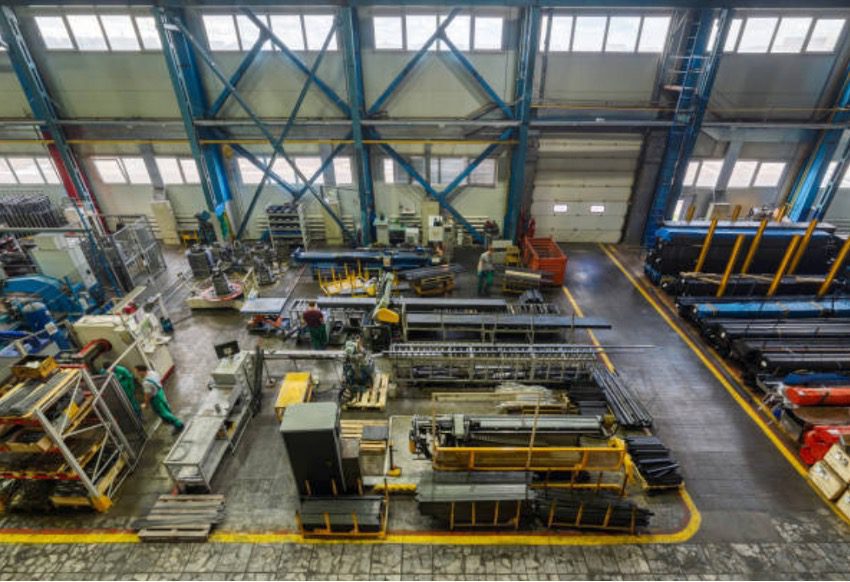
At Geprom, we have carried out multiple projects implementing a Mes System. The sectors in which we have worked the most are automotive, food and beverage, manufacturing, logistics, pharmaceutical and energy. However, we see each project as unique, so the sector is not the most important thing when it comes to the project, but rather the type of production.
If you want to take your factory towards the Smart Factory and benefit from the advances of Industry 4.0, Geprom can help you.
MES by Industry:
- Automotive: Total Control and Traceability
The automotive sector requires precise coordination and full traceability. MES tracks order progress in real-time, links each unit to its VIN, ensures quality at every station, and integrates with predictive maintenance and JIT/JIS sequencing. - Food & Beverage: Real-Time Quality and Compliance
MES ensures compliance with standards like IFS or BRC, tracks batch traceability, monitors critical variables (e.g., temperature, humidity), and guarantees traceability from raw materials to the final product. - Pharmaceutical & Cosmetics: Regulatory Compliance and Sterile Production
In regulated environments, MES supports GMP, FDA, and other standards. It manages formulas, validates processes, records electronic batch data (eBR), and ensures quality in sterile rooms or cleanrooms. - Chemical Industry: Safety, Formulations, and Batch Control
MES manages recipes, monitors critical safety parameters, guarantees traceability of sensitive chemicals, improves batch or continuous processes, and provides rapid response to deviations. - Consumer Goods & Packaging: Flexibility and Efficiency
MES enables operational flexibility, multi-format management, real-time quality control, reduced changeover times, and optimized line performance. - Electronics & High-Tech Industries: Precision and Component Traceability
MES ensures component traceability, step-by-step assembly control, early defect detection, functional testing, and integration with automated quality systems. - Metallurgical Industry: Process Control and Predictive Maintenance
MES integrates with SCADA and sensors to monitor temperatures, cycles, and machining times. It also enables predictive maintenance and monitors OEE of critical equipment.
MES in Industry 4.0
MES is a key enabler of digital transformation, connecting planning with execution, consolidating real-time data, and facilitating agile, data-driven decisions.
Integration with ERP and IoT Technologies
MES integrates with ERP, SCADA, IoT sensors, and plant devices to provide a unified view of operations, enabling predictive maintenance, automated quality control, and paperless production.
Sector-Specific MES Applications
MES adapts to each industrial context: unit-level traceability in automotive, batch management in food, regulatory control in pharma, and critical process supervision in metallurgy. Its scalable design allows it to meet diverse operational needs.
Benefits of Implementing MES by Sector
Regulatory Compliance: MES supports sector-specific standards (IFS, GMP, ISO, FDA) through automatic data recording, deviation alerts, and validated digital reporting, ensuring audit readiness and risk reduction.o de estándares sectoriales como IFS, GMP, ISO o FDA, mediante el registro automático de datos, alertas ante desviaciones y generación de informes digitales validados. Esto reduce riesgos y asegura la conformidad ante auditorías.
Cost and Downtime Reduction: Real-time production control and error reduction minimize stoppages, rework, and unplanned changes, optimizing resource use and reducing waste.
Complete Production Visibility: MES centralizes all plant data, offering real-time monitoring and reliable decision-making. Managers in production, quality, or maintenance have access to up-to-date KPIs.