What is a Distributed Control System (DCS) and how does it differ from a Manufacturing Execution System (MES) in Industry 4.0?
En el entorno de la automatización industrial, es común escuchar los términos DCS (Sistema de Control Distribuido) y MES (Sistema de Ejecución de Fabricación). Aunque ambos sistemas forman parte clave de la arquitectura de una planta moderna, tienen funciones muy distintas y complementarias. En este artículo, desde Geprom, referentes en transformación digital industrial, te explicamos qué es DCS, cómo se diferencia de un MES y por qué la integración de ambos resulta fundamental en el contexto de la Industria 4.0.
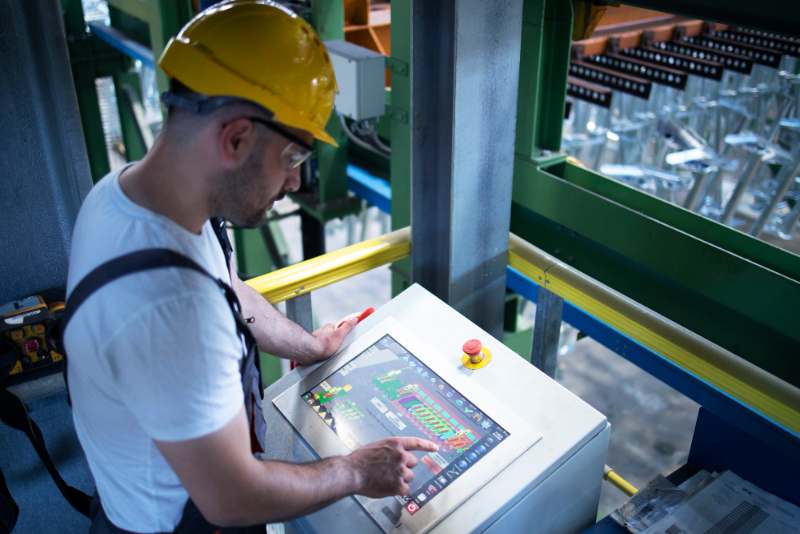
What is a Distributed Control System (DCS)?
A Distributed Control System (DCS) is an automation platform designed to control, monitor, and supervise industrial processes in real-time. Its architecture consists of a distributed network of controllers, sensors, actuators, and human-machine interfaces (HMIs) that work together to maintain the stability and safety of continuous processes.
Key features of a Distributed Control System (DCS):
- Real-time control of critical processes.
- High availability and redundancy, essential in sectors like energy, chemicals, petrochemicals, or pharmaceuticals.
- Scalability, allowing the management of everything from simple processes to complex industrial operations.
- Practical example: A DCS regulates the temperature of a chemical reactor or adjusts the flow of a pump based on plant conditions.
What is an MES?
The Manufacturing Execution System (MES), on the other hand, is a system focused on plant production management. It connects planning systems (ERP) with the control environment (such as the DCS), managing the tracking of production orders, traceability, quality, performance, and operational efficiency.
Key functions of MES:
- Real-time data logging in the plant.
- Inventory, resource, and work order management.
- Quality control and OEE analysis.
- Practical example: An MES tracks the production of a batch, logs quality results, and generates performance reports.
Puedes ampliar información aquí
Key differences between Distributed Control System (DCS) and Manufacturing Execution System (MES)

DCS and MES: A Strategic Integration
In a modern industrial environment, DCS and MES do not compete but complement each other. While the DCS ensures the continuous and safe operation of processes, the MES provides an intelligence layer for decision-making based on real data.
The integration of both systems allows for a holistic view of the plant, from the lowest level (sensor-actuator) to strategic decision-making at the management level.
In summary:
- The Distributed Control System (DCS) is the operational brain that controls the physical process.
- The Manufacturing Execution System (MES) is the organizational brain that manages how, when, and with what resources production is made.
Understanding what DCS is and how it differs from MES is essential to optimize industrial production and move towards a connected factory.