
Currently, the implementation of platforms such as MES and SCADA systems is essential for effective factory management. Both cooperate to optimize production process operations, adapting to today’s digitalized society.
In this article, we explain the main characteristics of each system and the differences between MES and SCADA.
SCADA System
The SCADA system (Supervisory Control and Data Acquisition) is focused on supervision, data collection, and control. By monitoring equipment, it allows real-time access to data.
It is characterized by its remote access capability due to digitalized operations. It allows data to be collected and analyzed remotely and in real time.
Additionally, it can store all collected data and reports and display them graphically to facilitate better interpretation.
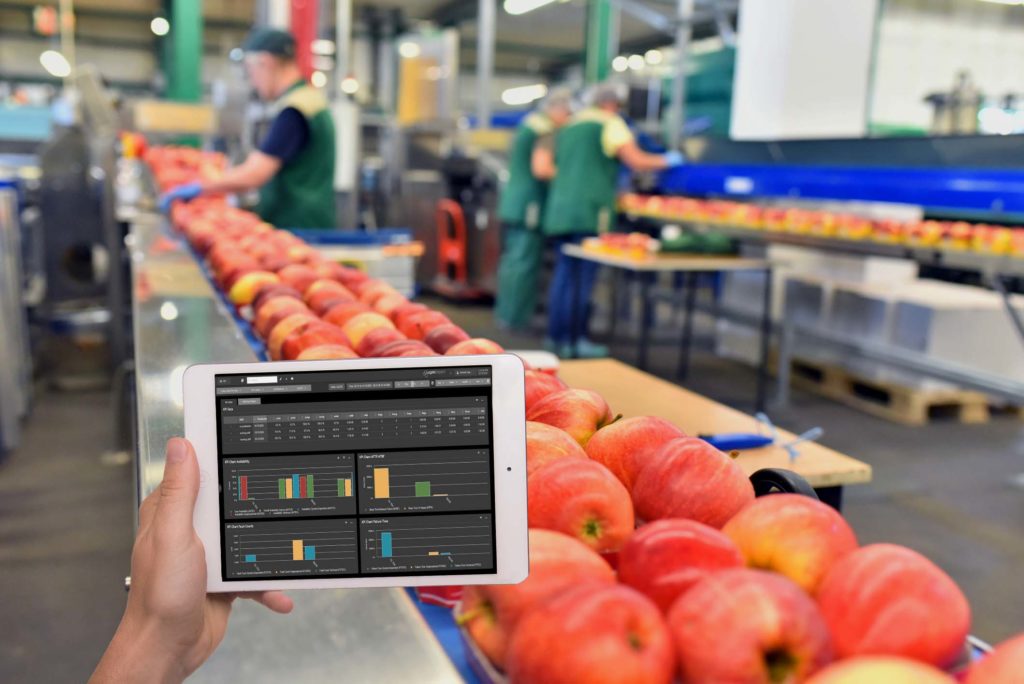
Real-time monitoring of an agri-food production line with a tablet and industrial management software
MES System
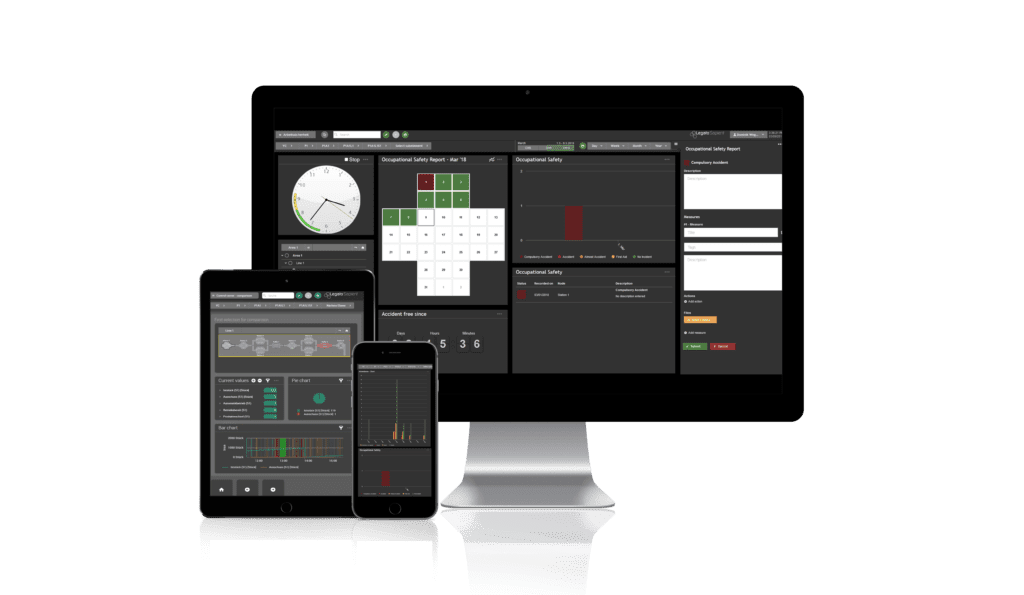
The MES system (Manufacturing Execution System) focuses on production. This system is based on production digitalization, allowing comprehensive management and control of factory operations: data collection, production orders, document management, planning, OEE detection, etc. In this way, it facilitates and speeds up all production processes while reducing costs and waiting time.
Thanks to the MES system, there is interconnection across all levels of production plants. This enables the calculation of operational performance and the improvement of efficiency.
Another advantage of the MES system is its ability to anticipate future breakdowns, failures, or errors. Due to continuous real-time data collection, operators are well-informed and can ensure the smooth operation of all production.
MES SYSTEM
Difference Between SCADA and MES
Based on the definitions above, the main difference between MES and SCADA lies in their primary function.
The SCADA system focuses on real-time data and information collection, while the MES system operates at a higher level, focusing on decision-making and using this data to manage, control, and execute production.
Therefore, these are two systems that work cooperatively and in real time, aiming to streamline production and ensure proper development of the production process.