In a global context marked by profound changes, we face challenges of a magnitude not seen for decades: pandemics, economic pressures stemming from energy crises, disruptions in the supply of raw materials—including food—and geopolitical conflicts that threaten the stability of supply chains worldwide.
We start from a new strategic vision at the European level, driven by the reflection carried out by Spain during its rotating presidency of the Council of the European Union. This vision has led to key proposals, such as the report presented by Enrico Letta and, more recently, the report by Mario Draghi. Both documents share a common goal: to strengthen the competitiveness of the European economy, with special attention to strengthening the industrial sector.
The messages are forceful. The European Union is losing ground in terms of productivity. As the Draghi report warns: “Europe is entering the first period in modern history in which GDP growth will not be supported by sustained net growth of the labour force.”
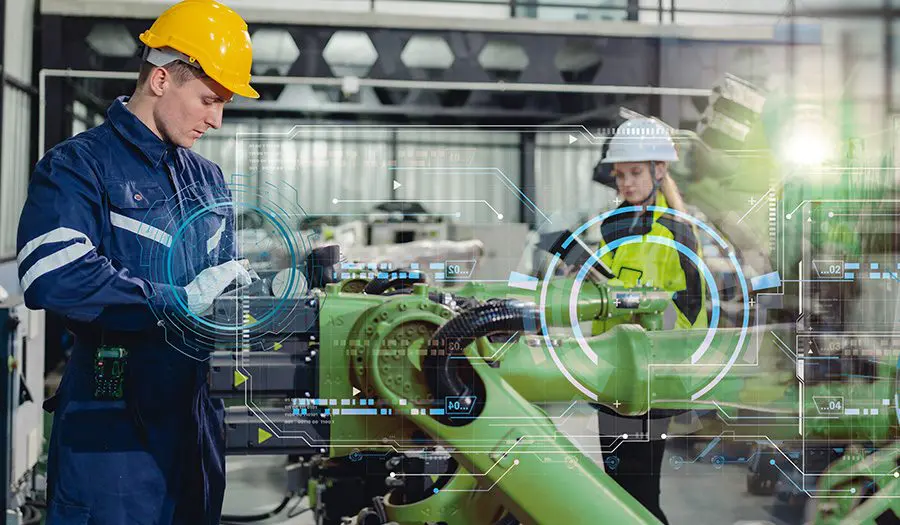
Current State of Industrial Digitalization in Spain
According to the *Digital Economy and Society Index (DESI) 2022, Spain is among the most advanced countries in digitalization within the European Union. It occupies a prominent position alongside countries such as Finland, Denmark, the Netherlands, and Sweden.
Spain has shown good performance in connectivity, business digitalization, and digital public services. However, there is still room for improvement in the adoption of advanced technologies by SMEs and in the development of digital skills among the population.
Since 2015, with the Industria Conectada 4.0 initiative and later with the PERTE, the country has promoted the digital transformation of the industrial sector, favoring strategic projects with great capacity for economic growth and competitiveness.
Resilience
Digitalization is no longer an option but a strategic necessity. But it is not enough to adopt technology: it is about building digital capabilities with resilience, that is, with solidity and flexibility to adapt and evolve in the face of crises or disruptions.
A resilient digital system responds to challenges such as volatile supply chains, increased cyberattacks, changing demands, or geopolitical crises. It can identify anomalies in real-time, redirect processes autonomously, and guarantee complete traceability.
Digital resilience lays the foundation for an antifragile industry, which is strengthened by change. This requires: scalable infrastructure, reliable data, cognitive automation, cybersecurity by design, and collaborative ecosystems.
Resilient digitalization depends on three pillars:
The availability and accuracy of data

Choosing the right partner

Promoting talent

And along with these technological pillars, resilience also depends on the ability of people to adapt to change and lead the transformation. Digital culture and organizational change are fundamental to turning technology into sustainable results.
Data as a Strategic Asset
Data generates value only when it is integrated into a resilient digital architecture that guarantees continuity, security, and adaptability. Converted into operational intelligence through interoperable platforms, advanced analytical models, and trained talent, data enables:
- Predictive maintenance.
- Dynamic reconfiguration of processes.
- Simulation of crisis scenarios.
It also reinforces cybersecurity, traceability, and regulatory compliance, in addition to empowering plant teams to make quick and localized decisions.
Challenges
- Integrated strategic vision (beyond isolated projects).
- Organizational culture resistant to change.
- Cybersecurity as an outstanding debt.
Opportunities
- Anticipation and response thanks to AI, digital twins, and predictive analysis.
- Greater operational efficiency.
- Agility in the face of regulatory or market changes.
- Solid alliances in the value chain.
- Reputation and sustainability as a competitive advantage.
Our Role
From Geprom, part of Telefónica Tech, we offer a comprehensive proposal that combines strategic consulting, technical execution, and continuous support, with benefits such as:
- Agility in projects.
- Integration with cloud, IoT, AI, and cybersecurity solutions.
- Intelligent data capture.
- Scalable and modular systems.
- Digital redundancy and automatic backup.
- Scenario simulation using digital twins.
Thus, factories are modernized, preparing them to resist and prosper in an uncertain future, where continuity depends on anticipation and agility.
You may be interested in: